I was notified that screening was "expense expensive" and may not supply conclusive outcomes. Paul's and Susan's stories are but two of literally thousands in which people die because our market-based system denies access to needed healthcare. And the worst part of these stories is that they were registered in insurance coverage but might not get required health care.
Far worse are the stories from those who can not manage insurance coverage premiums at all. There is a particularly big group of the poorest persons who discover themselves in this scenario. Maybe in passing the ACA, the government pictured those individuals being covered by Medicaid, a federally financed state program. States, however, are left independent to accept or deny Medicaid funding based on their own solutions.
Individuals captured because space are those who are the poorest. They are not qualified for federal aids because they are too poor, and it was presumed they would be getting Medicaid. These people without insurance coverage number at least 4.8 million grownups who have no access to health care. Premiums of $240 per month with additional out-of-pocket costs of more than $6,000 per year prevail.
Imposition of premiums, deductibles, and co-pays is likewise prejudiced. Some people are asked to pay more than others just since they are sick. Fees really prevent the accountable use of healthcare by installing barriers to gain access to care. Right to health rejected. Expense is not the only method in which our system renders the right to health null and void.

Employees remain in jobs where they are underpaid or suffer violent working conditions so that they can keep health insurance; insurance that might or might not get them health care, however which is better than absolutely nothing. Furthermore, those staff members get health care only to the extent that their needs agree with their employers' meaning of healthcare.
Pastime Lobby, 573 U.S. ___ (2014 ), which enables companies to refuse employees' coverage for reproductive health if inconsistent with the company's religious beliefs on reproductive rights. what home health care http://stephenstnc695.huicopper.com/the-facts-about-which-of-the-following-is-not-a-result-of-the-commodification-of-health-care-revealed is covered by medicare. Plainly, a human right can not be conditioned upon the faiths of another individual. To enable the exercise of one human rightin this case the company/owner's spiritual beliefsto deprive another's human rightin this case the employee's reproductive health carecompletely defeats the crucial principles of interdependence and universality.
Excitement About A Health Care Professional Is Caring For A Patient Who Is About To Begin Taking Verapamil
Despite the ACA and the Burwell decision, our right to health does exist. We should not be puzzled in between medical insurance and healthcare. Corresponding the 2 may be Click for more rooted in American exceptionalism; our nation has long deluded us into thinking insurance, not health, is our right. Our federal government perpetuates this myth by determining the success of healthcare reform by counting how many people are guaranteed.
For example, there can be no universal access if we have only insurance. We do not need access to the insurance coverage office, but rather to the medical workplace. There can be no equity in a system that by its very nature profits on human suffering and denial of an essential right.
Simply put, as long as we see medical insurance and healthcare as synonymous, we will never be able to claim our human right to health. The worst part of this "non-health system" is that our lives depend on the ability to gain access to health care, not health insurance. A system that permits large corporations to profit from deprivation of this right is not a healthcare system.
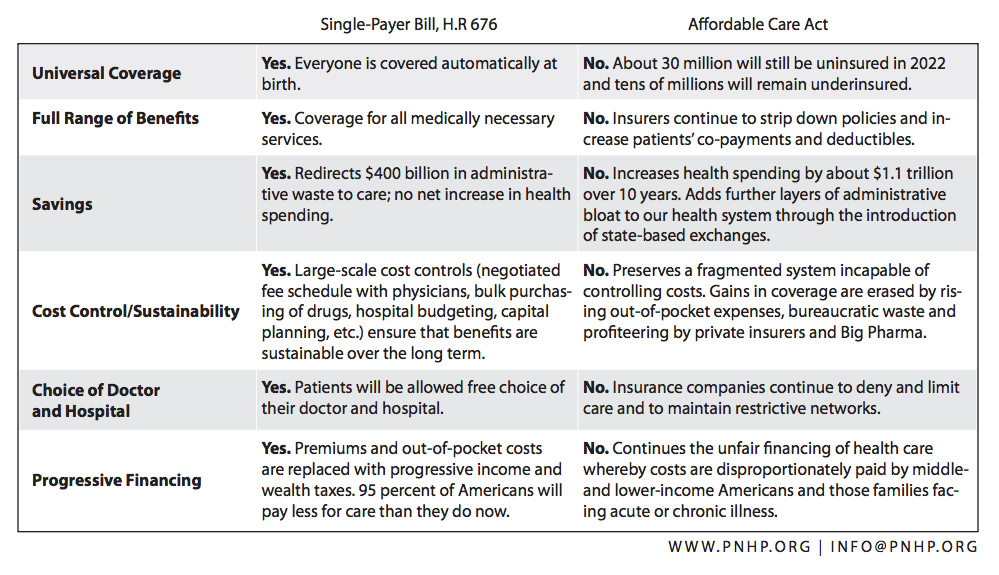
Only then can we tip the balance of power to require our federal government institute a true and universal healthcare system. In a country with some of the very best medical research, innovation, and practitioners, people ought to not need to die for absence of healthcare (which countries have universal health care). The genuine confusion depends on the treatment of health as a commodity.
It is a financial plan that has nothing to do with the real physical or mental health of our country. Worse yet, it makes our right to healthcare contingent upon our monetary abilities. Human rights are not commodities. The transition from a right to a commodity lies at the heart of a system that perverts a right into a chance for corporate profit at the cost of those who suffer the a lot of.
That's their organization model. They lose money every time we really use our insurance coverage to get care. They have investors who expect to see big profits. To preserve those profits, insurance is readily available for those who can afford it, vitiating the actual right to health. The genuine meaning of this right to health care requires that everyone, acting together as a community and society, take duty to make sure that each individual can exercise this right.
When Is Health Care Vote - Questions
We have a right to the real healthcare envisioned by FDR, Martin Luther King Jr., and the United Nations. We remember that Health and Human Services Secretary Kathleen Sibelius (speech on Martin Luther King Jr. Day 2013) assured us: "We at the Department of Health and Person Services honor Martin Luther King Jr.'s require justice, and remember how 47 years ago he framed healthcare as a standard human right.
There is nothing more basic to pursuing the American dream than great health." All of this history has absolutely nothing to do with insurance, but only with a basic human right to health care - how much does medicaid pay for home health care. We understand that an insurance coverage system will not work. We need to stop puzzling insurance and healthcare and need universal healthcare.
We should bring our government's robust defense of human rights house to safeguard and serve the people it represents. Band-aids won't repair this mess, however a true healthcare system can and will. As humans, we should call and claim this right Learn more here for ourselves and our future generations. Mary Gerisch is a retired lawyer and health care supporter.
Universal healthcare describes a national health care system in which everyone has insurance coverage. Though universal healthcare can describe a system administered entirely by the government, the majority of countries accomplish universal health care through a mix of state and private individuals, consisting of cumulative neighborhood funds and employer-supported programs.
Systems funded totally by the government are thought about single-payer health insurance coverage. As of 2019, single-payer healthcare systems might be discovered in seventeen countries, consisting of Canada, Norway, and Japan. In some single-payer systems, such as the National Health Providers in the United Kingdom, the federal government supplies healthcare services. Under many single-payer systems, nevertheless, the government administers insurance protection while nongovernmental companies, including personal companies, provide treatment and care.
Critics of such programs contend that insurance coverage requireds require people to purchase insurance, weakening their individual liberties. The United States has actually had a hard time both with guaranteeing health coverage for the whole population and with lowering overall health care costs. Policymakers have sought to address the concern at the local, state, and federal levels with varying degrees of success.